Why are Vacheron Constantin Watches so expensive? The answer goes beyond a prestigious name or a polished gold case. It lies in the time, skill, and careful decisions behind each watch. Some models use intricate in-house movements, finished components, and complications that demand extensive assembly and testing. A tiny bevel on a movement bridge may take hours to shape. Even details hidden beneath the dial can require experienced hands.
The Maison’s founder, François Constantin, expressed its demanding outlook in the phrase, “Do better if possible, and that is always possible.” That principle helps explain the appeal, though it does not explain every price. Materials, production complexity, finishing, design, and after-sales support all matter. So does rarity, but limited production alone does not guarantee lasting value. Prices can also vary widely between collections and change in the secondary market.
There is more to examine. This introduction opens a closer look at craftsmanship, heritage, movements, and materials, while separating tangible watchmaking from brand prestige. It also leaves room for a fair question: how much of the cost can a buyer actually see, feel, or verify? The answer is not always simple. A beautiful movement can justify admiration, but not every premium will feel worthwhile to every collector. That distinction matters. A careful comparison of models, service needs, and ownership goals can make the price easier to understand—and the purchase less romanticized.
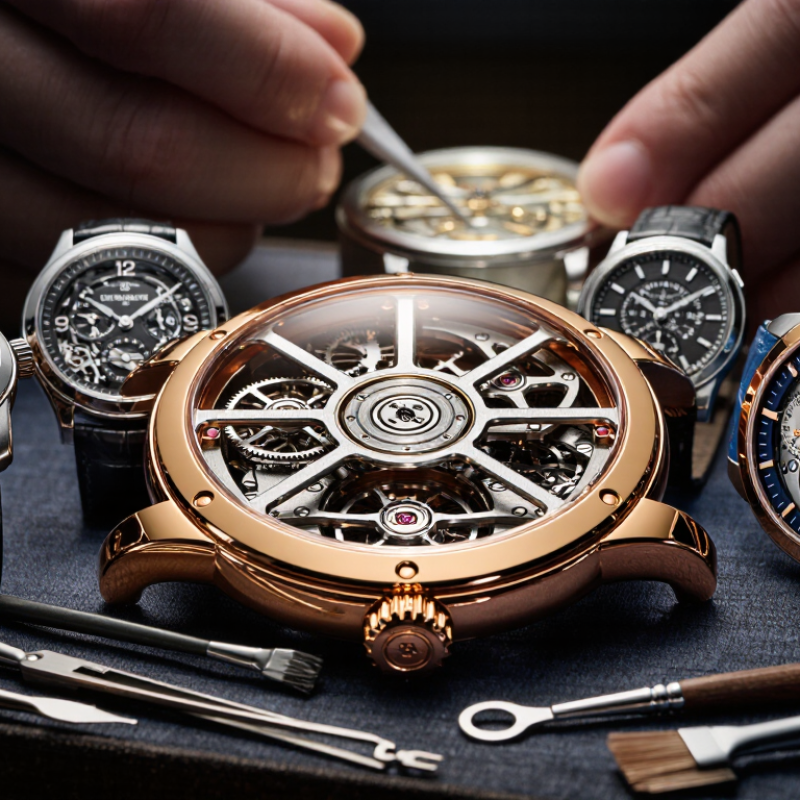
A centuries-old Swiss watch manufacture carries more than a movement inside its case. Its heritage lives in archived designs, patient hand-finishing, and techniques passed between generations. Each watch may require many hours of adjustment, inspection, and polishing. Tiny bevels catch the light along the bridges. The dial feels calm, even when its construction is remarkably complex.
Prestige develops slowly. Collectors trust a house that has survived changing tastes, economic pressure, and technological shifts. That trust affects pricing, but it should not end the discussion. A high price does not automatically mean perfect accuracy or personal value. Some details may feel less impressive in person than photographs suggest. That is worth admitting.
Tips: Examine the movement under magnification, not only the logo or case shine. Ask for service records, production information, and an explanation of the finishing. Compare the watch with similar high-end pieces before deciding. Heritage matters most when it connects with careful construction, reliable ownership support, and your own taste. Otherwise, prestige can become an expensive story.
A luxury mechanical watch is expensive partly because its surface carries human labor. Hand-finishing shapes the watch long before it reaches the wrist. A craftsperson bevels each bridge edge, then polishes the angle until it catches light evenly. Tiny wheels may receive circular graining, while screws are heat-treated and carefully blued. These details are functional, but they are also visual evidence of control.
The work is slow. It is difficult to standardize. One uneven bevel can force an artisan to restart the process. Under magnification, a polished surface should remain clean, without ripples or tool marks. According to the Federation of the Swiss Watch Industry, Swiss watch exports reached CHF 26.7 billion in 2023. That figure reflects strong global demand, but it does not measure finishing hours directly. Deloitte’s Swiss Watch Industry Study also identifies skilled labor as a continuing industry challenge. Scarce expertise raises production costs.
Hand-finishing does not make every expensive watch automatically superior. That assumption deserves scrutiny. A decorated movement may look impressive, yet its timekeeping still depends on design, adjustment, and quality control. In my experience, the most convincing details appear quietly: a sharp interior angle, a screw head aligned with care, or a bridge that feels smooth under a loupe. These small choices explain part of the price. The rest includes inspection, training, rejected components, and years spent mastering imperfect materials. Some marks are invisible to the customer. They still cost time.
An in-house movement is designed, made, and adjusted within a watchmaker’s own workshops. That control can shape more than prestige. Engineers can tailor the gear train, bridges, and winding system to fit a particular case, rather than adapting an off-the-shelf calibre. Tiny details matter: a hand-finished bevel catches light, while a carefully adjusted escapement helps regulate timekeeping. These choices require specialist tools, skilled labor, and repeated testing. That takes time.
The cost is not proof of better performance by itself. A thoughtfully designed external movement can be reliable, and in-house parts still need rigorous quality control. The Federation of the Swiss Watch Industry reported Swiss watch exports of CHF 26.7 billion in 2023, up 7.6% from 2022. That industry figure shows the scale of the premium market, but it does not reveal the production cost of any single watch. Buyers should look beyond the label: service access, component durability, and documented testing matter too. Even beautiful engineering can be inconvenient if repairs require scarce expertise. I find this part easy to overlook.
Common mechanical-watch balance frequencies, shown as beats per hour (bph)
Mechanical watches commonly run at 18,000–36,000 beats per hour. Higher frequency means more balance-wheel beats each hour, but frequency alone does not determine accuracy or price. The cost of a finely made movement also reflects precision manufacturing, hand finishing, assembly, adjustment, and testing.
Why Are High-End Watches So Expensive?
How Materials and Complications Affect Prices
A watch’s price can begin with what you can see: a warm gold case, sharply finished edges, and a bracelet polished link by link. The World Gold Council reported an average gold price of US$2,386 per ounce in 2024, up 23% from 2023. That market shift can raise material costs, but metal weight is only part of the bill. Harder materials may demand slower cutting, specialized tools, and more finishing time. Tiny surface marks matter. So does the metal left unused during production.
Complications add another layer of labor. A calendar that accounts for leap years or a chronograph with multiple timing functions needs more components and careful adjustment. Watchmakers must assemble, regulate, and test those parts; a small timing error can mean hours of rework. Deloitte’s 2024 Swiss Watch Industry Study identifies craftsmanship and quality as important purchase considerations. That helps explain why skilled labor and inspection affect pricing, though it does not prove every expensive watch offers equal value. Still, price and value are not twins.
Tips: Compare case material, movement functions, finishing, and service requirements—not just the number on the dial. Ask what testing is performed. A complication may be fascinating, but you may rarely use it.
Limited production shapes the economics of a high-end mechanical watch in practical ways. A small workshop can only assemble and regulate so many movements each year. Skilled hands, careful testing, and finishing under a loupe take time. That labor matters. When output stays low, retailers may receive fewer pieces than customers request, making availability part of the appeal. Yet scarcity alone does not prove superior quality; it can also strengthen a maker’s pricing power.
Exclusivity has a market effect beyond the workshop. Buyers may value the chance to own something rarely seen, while limited supply can keep demand lively in resale markets. Those outcomes are not guaranteed, and resale prices can shift with tastes and economic conditions. Not always. For a buyer, the useful question is whether the watch’s construction, service support, and design justify its cost without relying on rarity. I may be underestimating the emotional pull of exclusivity, but it is easy to confuse hard-to-find with inherently better. A long wait can feel special, though it does not add another hour of craftsmanship to the movement.
Heritage can live in archived designs, hand-finishing, and skills passed between generations. Tiny bevels may catch the light. History alone is not enough.
No. A high price does not guarantee perfect accuracy or personal value. Ask about regulation and inspect the movement closely.
Look at the movement under magnification, not just the polished case. Request service records and production details. Compare similar watches, too.
Small workshops have limited capacity. Skilled assembly, testing, and finishing take time. A loupe reveals how careful the work can be.
No. Scarcity may increase appeal and pricing power, but it does not prove superior construction. Hard to find is not always better.
It can influence demand, but resale prices may change with tastes and economic conditions. Not guaranteed. Rarity is no promise of future value.
Consider construction, service support, design, and your own taste. A prestigious story may feel less convincing in person.
No. A long wait can make ownership feel special, but it adds no extra hours to the movement. I may underestimate that emotional pull.
Vacheron Constantin Watches are expensive because their value reflects a long tradition of watchmaking, careful craftsmanship, and limited production. Each timepiece is shaped by skilled specialists who devote considerable attention to hand-finishing, refining visible details and components that may never be seen during everyday wear. This labor-intensive process takes time and helps distinguish finely made watches from mass-produced alternatives.
The price also reflects the design and production of in-house movements, along with the engineering needed to make complex functions work reliably. Precious or technically demanding materials can add further cost, while complications require additional expertise and assembly. Finally, producing watches in small quantities makes each one less widely available and adds to its exclusivity. Together, heritage, finishing, technical design, materials, complications, and controlled supply explain why these watches command a premium.

Ruifeng