Buying Audemars Piguet Ladies Watches requires more than choosing a beautiful dial. It involves examining design, condition, provenance, and long-term value. François-Henry Bennahmias, former Chief Executive Officer of Audemars Piguet, once described the brand’s purpose simply: “We are not in the watch business; we are in the emotion business.” That perspective matters when comparing a diamond-set Royal Oak, a refined Millenary, or a classic Code 11.59.
This guide introduces seven practical tips for making a more confident purchase. You will learn how to identify the correct reference number, assess case proportions, and inspect details such as dial finishing, bracelet alignment, and movement condition. A watch may look flawless under bright boutique lighting. Scratches can appear later. Small details matter.
The discussion also covers authorized retailers, independent dealers, service records, warranty documents, and realistic pricing. Authenticity should never depend on photographs alone. A complete set can help, but missing packaging does not automatically make a watch unreliable. That is where judgment becomes difficult. Consider your wrist size, wearing habits, and tolerance for maintenance before focusing on resale value. Audemars Piguet Ladies Watches can be elegant daily companions, yet some models require careful handling and professional servicing. The right choice is not always the rarest one. It is the watch whose history, condition, fit, and price make sense together.
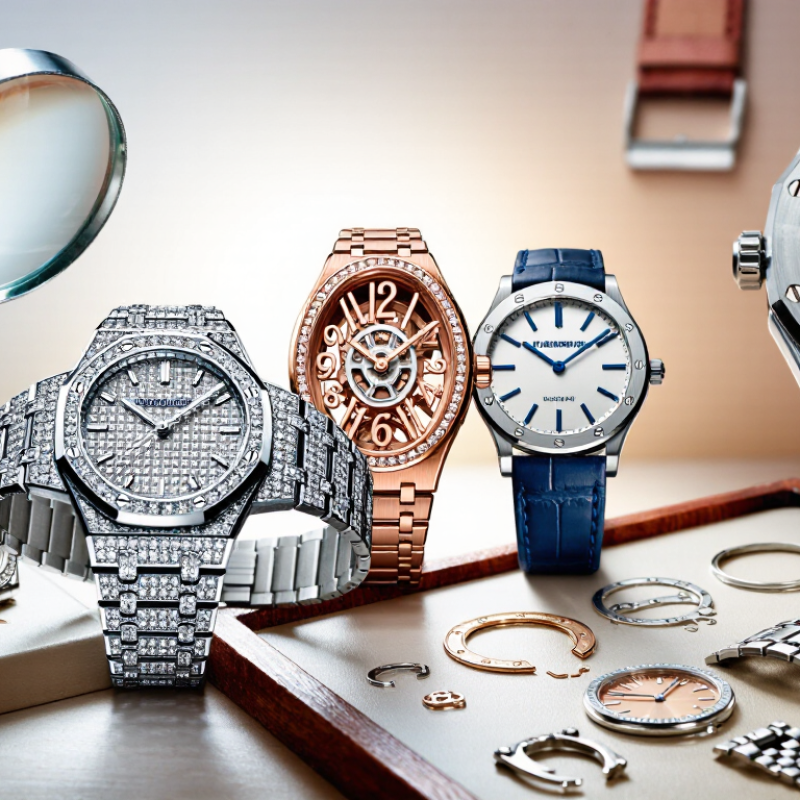
Ladies’ luxury watches often fall into three visual families: refined dress styles, bold integrated-bracelet designs, and jewelry-inspired pieces. Dress watches usually use slimmer cases, polished bezels, and restrained dials. They suit formal clothing and smaller wrists. Integrated-bracelet styles feel more architectural, with sharp links and stronger wrist presence. Jewelry-inspired models may add gemstones, unusual colors, or sculpted details. They attract attention quickly, but they can be harder to wear daily.
Study the collection’s proportions before choosing its decoration. A 34-millimeter case may look balanced on one wrist and oversized on another. Try the watch with a sleeve, not only under bright showroom lights. Check whether the clasp sits flat and whether the bracelet pulls arm hair. Small details matter. Automatic movements, precious-metal cases, and complicated functions usually require careful servicing. Ask for movement photographs, service records, and a clear return policy. An experienced seller should explain these points without rushing you.
Style preferences can change. A highly jeweled dial may feel perfect today, then seem limiting later. I once underestimated how quickly a bright finish showed fingerprints. That is an easy mistake. Compare the watch in daylight, under warm indoor lighting, and beside your usual jewelry. Confirm the case material, dial configuration, and bracelet condition independently. Paperwork supports confidence, but physical inspection remains essential.
| Tip | What to Evaluate | Common Options or Benchmarks | Why It Matters |
|---|---|---|---|
| 1. Match the Watch to Your Wrist | Case diameter, lug-to-lug length, thickness, and overall weight | Small and refined: 24–28 mm; versatile: 28–34 mm; statement style: 35 mm or larger. A slim case is often more comfortable under a sleeve. | A proportional case sits more securely and helps the watch look balanced rather than oversized or difficult to wear. |
| 2. Choose a Movement Type | Mechanical, automatic, or quartz movement | Mechanical and automatic watches require regular winding or wrist motion; quartz watches typically use a battery and are known for convenience and accuracy. | The movement affects maintenance, daily accuracy, servicing needs, thickness, and the ownership experience. |
| 3. Understand the Collection Style | The design language, case shape, dial layout, and bracelet construction | Classic round cases offer versatility; integrated-bracelet designs create a continuous silhouette; geometric cases appear more contemporary; gem-set styles emphasize evening wear. | Recognizing the design family makes it easier to select a watch that fits your wardrobe and personal style. |
| 4. Check Materials and Finishing | Case metal, crystal, dial details, bracelet, clasp, and surface finishing | Common case materials include stainless steel, titanium, ceramic, and precious metals. Sapphire crystal is highly scratch-resistant compared with mineral crystal. | Materials influence durability, weight, appearance, allergy considerations, and long-term care requirements. |
| 5. Review Water Resistance | The stated water-resistance rating and the intended activity | 30 m is generally suitable for splashes; 50 m offers more everyday protection; 100 m is better suited to swimming when the manufacturer permits it. Water resistance is not permanent. | A rating helps prevent using a dress watch in conditions for which its seals and construction were not designed. |
| 6. Compare Comfort and Adjustability | Bracelet flexibility, clasp design, strap material, and available adjustment points | A folding clasp can provide a secure fit; leather and textile straps are often lightweight; metal bracelets may require links or half-links for precise sizing. | Comfort encourages regular wear and reduces the chance of the watch sliding, pinching, or catching on clothing. |
| 7. Verify Condition and Documentation | Serial or reference information, service history, purchase documents, authenticity, and return terms | Inspect the case and bracelet for excessive polishing, check that functions operate correctly, confirm included accessories, and request an independent inspection for a pre-owned watch. | Clear documentation and a transparent condition report reduce purchase risk and help establish future service and ownership records. |
Dress watches use slim cases, polished bezels, and quiet dials. Integrated-bracelet designs look sharper and more architectural. Jewelry-inspired watches may feature gemstones or unusual colors. The eye-catching option may be less practical daily.
Try it with a sleeve, not only under bright showroom lights. A 34-millimeter case may look balanced on one wrist and large on another. Check whether the clasp lies flat. Also notice whether the bracelet pulls arm hair.
Examine the case edges, bracelet stretch, clasp, crystal, and dial under strong light. Request movement photographs and a recent service invoice. Original papers can support confidence, but they do not prove authenticity alone. Independent inspection remains important.
Vintage pieces can show softened gold, aged lume, and genuine character. They may also hide moisture damage or replaced parts. Check the dial, hands, movement, and case lines carefully. I might change my mind after seeing the actual watch.
Keep roughly 10–15% aside for taxes, shipping, authentication, and adjustments. Also budget for servicing, insurance, straps, clasp repairs, and secure storage. Luxury mechanical maintenance may cost five to ten percent of the purchase price. Estimates vary.
Steel is often easier to maintain. Gold adds weight, insurance value, and polishing risk. Ceramic may resist scratches, but replacement components can be harder to source. A cheaper purchase can become expensive later.
A date display is generally simpler than a chronograph. Perpetual calendars contain more intricate mechanisms and may require specialist labor. Ask about service intervals before choosing complicated functions. More features are not automatically better.
View it in daylight, warm indoor light, and beside your usual jewelry. Bright finishes may reveal fingerprints quickly. I once underestimated that detail. Decoration can look perfect today, then feel limiting later.
Buying Audemars Piguet Ladies Watches requires more than choosing an attractive design. Begin by exploring the available collections, case sizes, dial styles, bracelet options, and levels of decoration to find a watch that suits your personal taste and daily routine. Establish a realistic budget that includes not only the case material and complications, but also insurance, maintenance, servicing, and possible restoration costs. Before purchasing, carefully verify the serial number, accompanying documents, receipts, and ownership history. These details can help confirm the watch’s identity and provide greater confidence in its background.
Next, compare new, pre-owned, and vintage options, considering their pricing, availability, condition, and long-term appeal. Inspect the case, crystal, dial, bracelet, clasp, and movement for signs of wear or replacement parts. Make sure the watch fits comfortably and request clear service records whenever possible. A well-maintained piece with complete documentation may offer stronger resale potential, while a vintage model may require additional care. Taking time to evaluate every factor will help you make a confident and informed purchase.

 Ruifeng